Andy and I were in a monastery in the north of Portugal when I found out about Bute’s connection to Cardiff. We had just completed a long hike, during which we’d encountered a sprawling religious sanctuary in the heart of a forest and also a curious wolf, and were relaxing with a post-walk beer in the vaulted lounge of a pousada (the Portuguese equivalent of Spanish paradors) in a 12th century former Cistercian monastery. In more than a week of yomping across the mountains and valleys of Peneda-Gerês National Park we hadn’t heard another British voice. Yet, within a few minutes of getting comfortable, a large group of British excursionists surrounded us. One couple sat opposite and, after visibly scanning our out-of-place dusty and dirty hiking gear, struck up a conversation. The man asked in a lilting Welsh accent why we were at the pousada, explaining he and his wife were part of a tour group travelling around Portugal staying at various pousadas, which sounded a nice thing to do. When he heard my Scottish accent, he asked where I was from.
‘The Isle of Bute,’ I told him, expecting the usual blank look.
‘Ah,’ he nodded knowingly. ‘Your Lord Bute was responsible for making the city where we come from what it is today. The Bute family transformed Cardiff from a backwater into one of the greatest coal exporting ports in the world.’

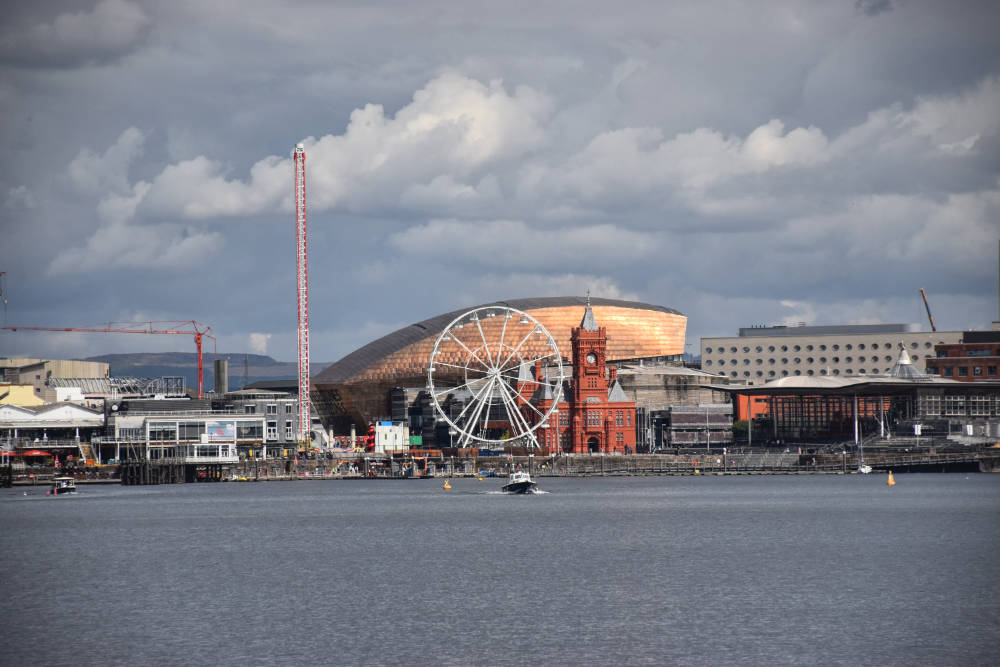
Last week, we visited Cardiff for the first time. At the end of our first afternoon, I posted some photos illustrating Cardiff’s Bute connection on Facebook. A friend, who also grew up on the Isle of Bute, asked an interesting question: “Did you feel a genuine connection with the place, or just the names?” It didn’t take me long to come up with an answer. It wasn’t the fact there were references to Bute all across Cardiff – Bute Street, Butetown, Bute Park, Bute Dock – it was more that many of them felt like a little fragment of my home island relocated to a Welsh city.

Take Cardiff Castle, a Gothic folly both inside and out in many ways whose Clock Tower adds a distinctly European vibe to the centre as it looks more suited to a Bavarian or Czech city than a British one. The distinctive architecture of the main house makes it feel it could be part of the Bute Estate on the island. The fact that all the references only exist because of the Marquess of Bute’s influence and actions make them more than just familiar names. I even felt a wee bit proud (more than a wee bit in truth) to come from the same island as the people who had transformed Cardiff in such a positive way, making it the unique and multicultural city it is today. Funnily, I remember a similar feeling of connecting after we moved to Tenerife, albeit in a much smaller way, when I opened a guidebook gifted to us by our friend Jo to see a picture of the 3rd Marquess of Bute at carnival on Tenerife back in the 19th century.

As well as Bute, there are other familiar names. Mount Stuart Square, named after the ancestral home of the Bute family. There’s even The Mount Stuart pub (a Spoons) at Cardiff Bay. Ninian Park was the former home of Cardiff City FC. Although it was named after Lord Ninian Crichton-Stuart, the 3rd Marquess’s son, it made me think more of the chippy across the road from where we lived in Rothesay.

The Bute name wasn’t the only connection. Out on the Cardiff Bay Barrage is a memorial to Scott of the Antarctic’s ill-fated expedition. One of Scott’s party was Lieutenant Henry Robertson “Birdie” Bowers, who was born in Greenock and whose mother and sister moved to the Isle of Bute following the death of Bowers’ father. It’s said that when he visited, Bowers would swim from Ardbeg Point all the way across Rothesay Bay to Craigmore.

There was one more unexpected connection. It was at the funfair beside Cardiff Bay, so is only temporary. Atop one of the stalls was a huge inflatable model of The Waverley, the world’s last seagoing paddle steamer. The lovely old vessel gets about a bit these days (one of her stops is at Penrith on the fringes of Cardiff Bay) but her original purpose was to cruise sea lochs on the Firth of Clyde. Any sighting of her, even in blow-up form, is like looking through a window to my youth.
It was impossible not to feel a connect to Cardiff.